



Grade 4
Summative ELPAC: Oral Language
Below you will find more details on the areas the ELPAC includes as well as how you can understand your child’s scores. Use this information to get a deeper understanding of what your child has mastered or areas where your child may need more help. There are also resources you can use to locate additional activities to support your child’s learning at home.

What does my child need to understand and do in this area?
For Listening, students can listen to a variety of scenarios, including conversations, presentations, and stories and answer questions about what they heard.
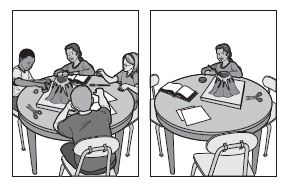
For Speaking, students can speak in English for a variety of purposes: to talk about an illustration or scene, support their opinion, retell a story and summarize an academic presentation.


Sample Test Questions
Here are sample test questions.
-
 1 Listening
-
Read the following to the student.
-
Narrator
Listen to a teacher talking to his students about apples. Listen carefully. You will hear the information only once. After listening, you will answer some questions. As you listen, you may use the blank areas in your Test Book to take notes.Man
Have you ever noticed when you’re eating an apple that the inside part that’s usually white…
-
Narrator Listen to a teacher talking to his students about apples. Listen carefully. You will hear the information only once. After…
-

-
What is the teacher mainly discussing?
-
-
A
how to cut an apple
-
B
the differences between enzymes
-
C
why apples change color
-
A
-
What does the teacher say that apples have inside of them?
-
-
A
a type of enzyme
-
B
a lot of oxygen
-
C
citric acid
-
A
-
-
C
why apples change color
-
C
-
-
A
a type of enzyme
-
A
-
-
2 Speaking
-
Say: I am going to ask you for your opinion.
Point to each picture at the appropriate time while reading the question.Say: Your class is learning about volcanoes. Your class will be making volcano models.
Would it be better to work on the project as part of a group or by yourself?
Wait for initial choice.Say: Explain your choice by giving relevant reasons to support your opinion.
-
-
Full score – Student provides an opinion and provides information to enhance it.
Half score – Student provides an opinion only, with no enhancing information.
No score – Student does not provide an opinion.
-